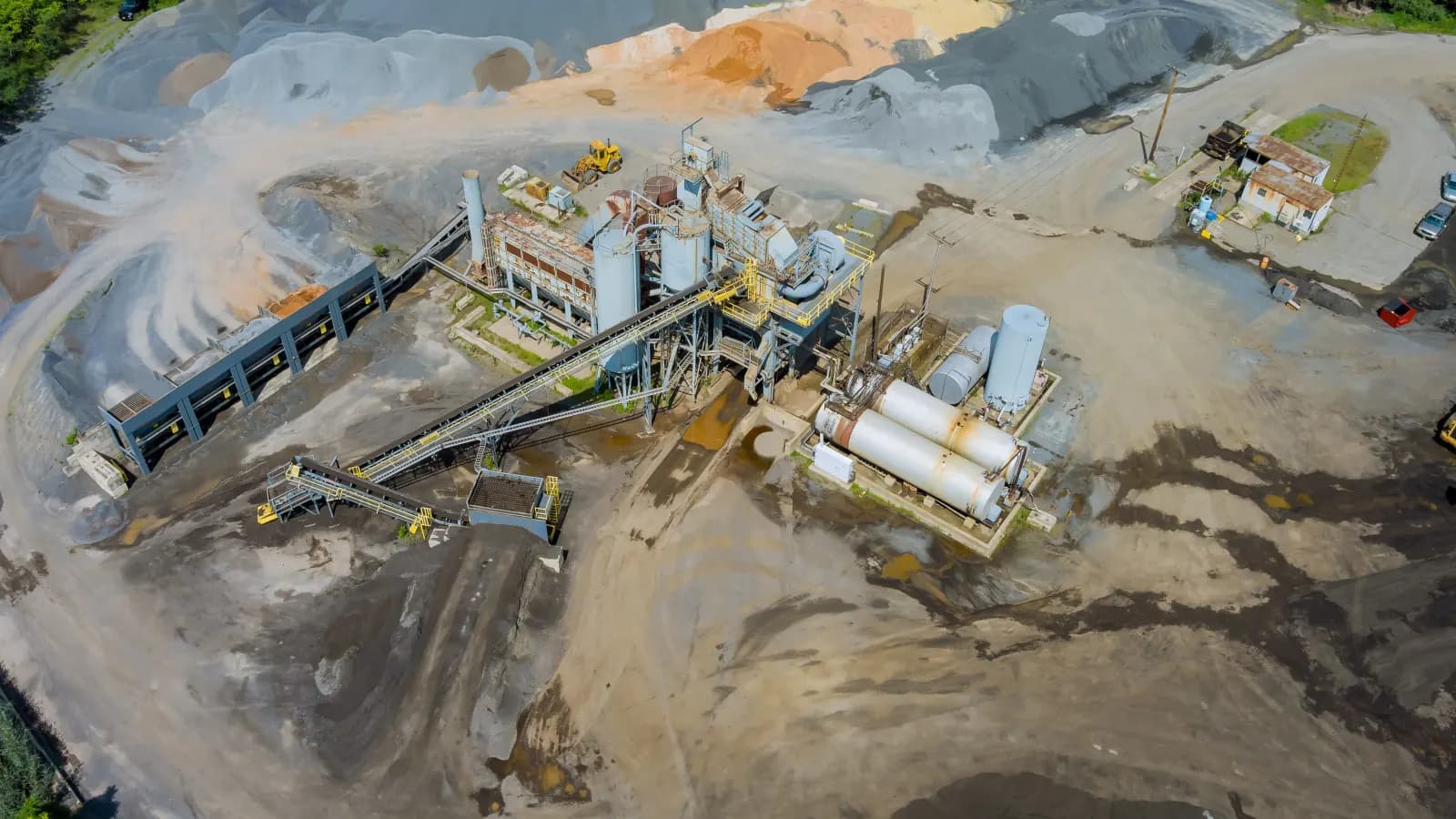
One of asphalt pavement's most valuable characteristics is that an old road does not have to become waste.
When an asphalt surface is milled or removed during rehabilitation, the recovered material can be processed into reclaimed asphalt pavement, or RAP. That material contains both aggregate and aged asphalt binder—two resources that can potentially return to new pavement instead of being replaced entirely by virgin materials.
For infrastructure owners facing sustainability targets, material costs and growing pressure to do more with existing resources, the appeal is obvious. The more important question is: how can we increase recycled content without sacrificing the service life that makes pavement sustainable in the first place?
RAP is more than recycled stone
RAP should not be treated simply as aggregate.
The reclaimed material contains an aged binder whose properties affect the new mixture. FHWA therefore emphasizes that recycled pavement should be cost-effective, environmentally responsible and capable of performing well. It promotes RAP use while also recognizing that high-RAP mixtures require appropriate materials and mixture-design practices.[1]
This matters because increasing RAP can increase mixture stiffness. In cold climates, FHWA identifies low-temperature cracking as a particular concern at high RAP contents.[1]
The practical implication is straightforward: responsible recycling is not about maximizing a percentage. It is about maximizing useful recycled material within a mixture that continues to meet performance requirements.
The environmental case is real—but performance determines the full benefit
Closed-loop asphalt recycling can displace both new aggregate and virgin asphalt binder. The U.S. Environmental Protection Agency's life-cycle work finds that recycling asphalt into new hot-mix asphalt can reduce greenhouse-gas emissions relative to producing equivalent material entirely from virgin resources because avoided raw-material production outweighs additional recovery and processing energy in its model.[2]
FHWA's sustainable-pavement work likewise shows why RAP can produce both environmental and economic benefits when evaluated over the pavement life cycle.[3]
But recycled content is not sustainable if the resulting road fails prematurely.
A mixture that saves virgin material today but substantially shortens service life could move environmental and financial burdens downstream. That is why life-cycle assessment, life-cycle cost and performance testing belong in the same conversation.
Canada is actively working through the RAP opportunity
The issue is particularly relevant in Canada. The Transportation Association of Canada describes RAP as a cost-effective partial replacement for virgin aggregate and binder, while noting that Canadian agencies have also observed premature distress, including cracking, as recycled content rises in some applications. TAC's work aims to develop practice-ready guidance for Canadian agencies.[4]
Ontario specifications explicitly address hot-mix asphalt, performance-graded asphalt cement and recycling processes, while current Ministry of Transportation provisions include requirements related to hot in-place recycled mixtures.[5]
This is exactly the kind of environment in which better materials engineering matters: agencies want to conserve resources, but they also need confidence in pavement performance.
Four variables deserve close attention
First is RAP characterization. The source material's gradation, binder content and binder properties affect how it behaves in a new mixture. British Columbia's current highway specifications, for example, require RAP aggregate gradations, asphalt content, rheological data and related mix-design information for RAP mixtures.[6]
Second is the combined binder system. Engineers need to understand how aged reclaimed binder and new binder interact, and whether the final system delivers the temperature and loading properties required by the project.
Third is mixture balance. Resistance to rutting cannot come at the expense of unacceptable cracking susceptibility. That is one reason performance-oriented approaches such as Balanced Mix Design are increasingly relevant.[7]
Fourth is production consistency. RAP stockpile management, moisture, fractionation, plant configuration and quality control can all influence the material reaching the roadway.
Polymer technology can be part of the toolkit—not a shortcut
When recycled binder increases mixture stiffness, modifiers or recycling agents may be considered as part of a broader formulation strategy. But there is no universal recipe.
The right approach depends on RAP percentage, recovered binder properties, virgin binder, traffic, climate, aggregate and desired performance. Even highly modified mixtures need testing when RAP is introduced; FHWA guidance on highly modified asphalt notes that RAP has been used successfully in some applications but can affect cracking resistance, reinforcing the need for mixture-level evaluation.[8]
For a materials innovator such as Polyversa, this creates a meaningful development opportunity. Polyversa states that its polymer-improver strategy is intended to enhance asphalt binding, temperature resilience, recyclability and custom formulation for environmental conditions. Those are relevant goals in recycled mixtures—but they should be demonstrated through controlled laboratory and field evidence for the specific RAP system being proposed.
A better procurement question
Instead of asking, “How much RAP can we put into this mix?” ask:
“How much RAP can this project responsibly use while meeting the cracking, rutting, moisture, constructability and service-life requirements that matter here?”
That reframing changes recycling from a material-percentage target into an engineering objective.
It also encourages better collaboration. Owners define performance and sustainability goals. Producers manage materials and production. Laboratories quantify mixture behaviour. Technology suppliers address specific material limitations. Contractors deliver the finished pavement. Field monitoring tells everyone whether the assumptions were correct.
Circular infrastructure works best when that chain stays connected.
The future of sustainable asphalt is therefore unlikely to be a simple competition between “virgin” and “recycled.” It will be a materials-engineering problem: use more of what we already have, understand how it changes the system, and design the remaining ingredients around the required performance.
That is how yesterday's pavement can become an asset for tomorrow's road.
Sources
- Asphalt Pavement Recycling with Reclaimed Asphalt Pavement (RAP) - Recycling - Sustainability - Pavements - Federal Highway Administration
- Documentation for Greenhouse Gas Emission and Energy Factors Used in the Waste Reduction Model (WARM) Construction Materials Chapters
- Towards Sustainable Pavement Systems. A Reference Document.
- Using Recycled Asphalt Pavement in Asphalt Mixtures in Canada | Transportation Association of Canada (TAC)
- O. Reg. 283/26: STANDARDS FOR ROAD DESIGN AND CONSTRUCTION
- 2025 Standard Specifications for Highway Construction - Volume 1
- Asphalt Mixture Design and Balanced Mix Design - Asphalt - Pavement & Materials - Pavements - Federal Highway Administration
- Highly Modified Asphalt: How-To Document